
If you are looking for mental health support, one of the first questions you may have is whether you should see a psychologist or a psychiatrist. Both professionals work with mental health concerns, but their training, treatment methods, and roles can differ.
Understanding the difference between a psychologist and psychiatrist can help you make a more informed decision about your care. In some cases, you may benefit from working with both professionals as part of a coordinated treatment plan.
At Alliance Behavioral Health Specialists (ABHS), patients can access psychiatric evaluations, psychological evaluations, therapy, medication management, and other behavioral health services based on their individual needs.

What Is a Psychologist?
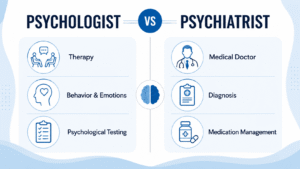
A psychologist is a mental health professional trained in human behavior, emotions, psychological assessment, and evidence-based forms of psychotherapy.
Psychologists commonly help patients understand and manage concerns such as:
- Anxiety
- Depression
- Stress
- Trauma
- Relationship difficulties
- Behavioral problems
- Emotional regulation
- Life transitions
Psychologists may also perform psychological assessments to better understand emotional, cognitive, or behavioral concerns.
The American Psychological Association notes that psychologists typically emphasize thoughts, feelings, behavior, assessment, and psychotherapy in their approach to treatment.
What Is a Psychiatrist?
A psychiatrist is a medical doctor who specializes in mental health.
Because psychiatrists receive medical training, they can evaluate both the psychological and medical factors that may contribute to a person’s symptoms. They can diagnose mental health conditions, develop treatment plans, and prescribe medication when appropriate.
A psychiatrist may help patients experiencing:
- Depression
- Anxiety disorders
- Bipolar disorder
- ADHD
- PTSD
- OCD
- Mood changes
- Sleep-related concerns
- Complex psychiatric symptoms
Psychiatrists may also provide psychotherapy, although medication management and medical psychiatric care are often central parts of their role. The APA notes that psychiatrists commonly help manage mental health conditions through medication, while psychologists tend to place greater emphasis on psychotherapy and behavior.
Psychologist vs Psychiatrist: Key Differences
| Area | Psychologist | Psychiatrist |
|---|---|---|
| Primary training | Psychology and behavioral science | Medicine and psychiatry |
| Therapy | Commonly provides psychotherapy | May provide psychotherapy |
| Psychological testing | Common | Less commonly the primary focus |
| Medication | Usually does not prescribe* | Can prescribe medication |
| Medical evaluation | Limited | Medical and psychiatric evaluation |
| Main focus | Thoughts, emotions, behavior, therapy | Diagnosis, medical factors, medication, psychiatric care |
When Should You See a Psychologist?
A psychologist may be a good starting point when your main goal is psychotherapy or when you want to better understand patterns in your thoughts, emotions, relationships, or behavior.
You might consider seeing a psychologist if you are dealing with:
- Ongoing stress or anxiety
- Relationship challenges
- Grief
- Trauma
- Behavioral concerns
- Emotional difficulties
- Coping problems
- A need for psychological testing or assessment
Psychotherapy can help people identify difficult emotions, behaviors, and thought patterns and develop healthier ways of coping. NIMH notes that psychotherapy is provided by several types of mental health professionals, including psychologists and psychiatrists.
Can You See Both a Psychologist and a Psychiatrist?
Yes.
Mental health care does not always require choosing one professional instead of the other. Some patients benefit from receiving psychotherapy from a psychologist or therapist while also seeing a psychiatrist for psychiatric evaluation and medication management.
The APA specifically notes that optimal mental health care can sometimes involve the collaborative expertise of both psychologists and psychiatrists.
For example, a person with depression may receive:
- Psychotherapy to address thought patterns, stress, and coping strategies
- Psychiatric evaluation to assess symptoms and diagnosis
- Medication management when clinically appropriate
- Follow-up care to monitor progress and adjust treatment
Psychologist vs Psychiatrist for Anxiety
Both psychologists and psychiatrists may be involved in the treatment of anxiety.
A psychologist may focus on therapy approaches designed to help patients understand and manage anxious thoughts, triggers, behaviors, and coping patterns.
A psychiatrist may evaluate whether medication or other medical treatment should be part of the treatment plan.
Which professional is most appropriate depends on symptom severity, medical history, previous treatment, and individual preferences.
Psychologist vs Psychiatrist for Depression
Depression can be treated in several ways depending on the individual.
Some people may primarily need psychotherapy, while others may benefit from medication or a combination of therapy and medication.
NIMH states that treatment for mental illnesses commonly includes psychotherapy, medication, or a combination of the two.
If depression symptoms are persistent or significantly affecting daily life, a comprehensive evaluation can help determine the most appropriate next steps.
What Happens During a Psychiatric Evaluation?
During a psychiatric evaluation, a provider may ask about:
- Current symptoms
- Mental health history
- Previous treatment
- Medical history
- Current medications
- Sleep and appetite
- Family mental health history
- Substance use
- Work, school, and relationships
- Recent stressors or life changes
The goal is to understand the full picture rather than focusing on a single symptom.